Book Review: Warlight

Title: Warlight

Author: Michael Ondaatje

Genre: Historical Fiction

Pages: 290 pages; 9 hours (audiobook)

Level of difficulty: 3/5 Dictionaries

Rating: 2/5 Stars

Brief Introduction:

A vivid, thrilling novel of violence and love, intrigue and desire. It is 1945, and London is still reeling from the Blitz and years of war. 14-year-old Nathaniel and his sister, Rachel, are apparently abandoned by their parents, left in the care of an enigmatic figure named The Moth. A dozen years later, Nathaniel begins to uncover all he didn’t know or understand in that time.

Review:

The author deserves credit for experimenting with this writing style that reads like a memoir. The main character speaks of significant events in his life and the lives of those close to him, often imagining how things would have been – but yet telling the readers what had happened because he is the narrator.

However, it was not that engaging. I got bored a few times and wanted to stop reading/for it to end. I think it might be because the plot was relatively flat. There was not much development. We as readers aren’t incentivized to find out more about what happened to various characters in the book, for which Nathaniel is investigating because we don’t get to build much of a connection nor understanding of said characters.

TW: Death

You may get the book here!

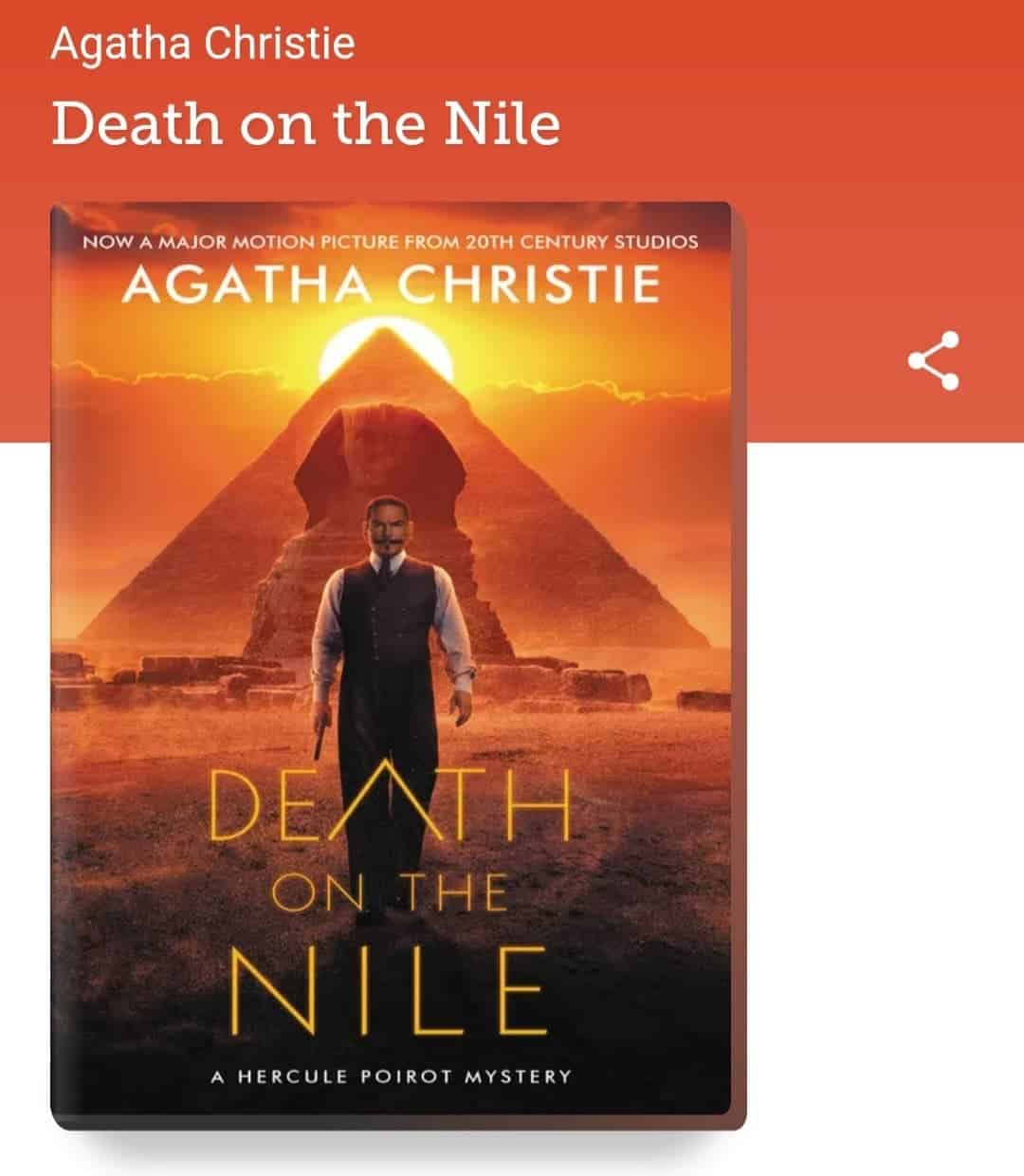
Book Review: Death on the Nile

Title: Death on the Nile

Author: Agatha Christie

Genre: Mystery, Thriller

Pages: 333 pages

Level of difficulty: 3/5 Dictionaries

Rating: 2/5 Stars

Brief Introduction:

Linnet Ridgeway, a young, stylish and beautiful girl has been shot through the head during a cruise along the Nile. The passengers are all close acquaintances of hers, so who is the murderer?

Review:

This was my first time reading Agatha Christie’s book even though I have watched and enjoyed several of her movies (including the adaptation of this book). However, the book was quite disappointing. I could guess the murder, although I was not sure how they did it. In addition, the other characters were not as interesting (and as such their motive in the murder was not as clear nor believable). Nevertheless, I will definitely pick up another of her books! 

You may get the book here!

Analytical Approaches to Primary Source Analysis

An Orientalist Approach to the Human Zoo at St. Louis World’s Fair 1904

Over 100 years ago, in 1904, peoples from across the globe were taken by various means and brought to the St. Louis World’s Fair in the United States of America to be ‘displayed’.1 During and shortly after the World’s Fair (April 30th – December 1st, 1904), several newspapers articles were published by the St. Louis Post-dispatch to advertise the exposition of peoples, inform readers of how they had gotten the peoples to come to the United States, and what ‘use’ the peoples would be off in the United States after the end of the World’s Fair.2 The newspaper articles, while limited as they may reflect uninformed public opinion, are useful in providing an interpretation of the World’s Fair during that time. An Orientalist analytical approach to the set of newspaper articles shall help us investigate what Edward Said would have interpreted as a tool that helped constitute ‘difference’ as the negative to the West and provide insight into how anthropologists and citizens alike could have participated in and allowed what we know today was a racist act violating human rights. 

In the work Orientalism, Edward Said argues that the orient was almost a European invention that had helped to “define the West as its contrasting image, idea, personality, experience”.3 This contrasting image portrayed the orient as inferior, uncivilised, and weird, while simultaneously portraying the Europeans as superior, civilised, and cultured. This example of a contrasting image was evident in the ‘display’ of peoples at the St. Louis World’s Fair 1904, which 20th-century scholars have termed a Human Zoo. By putting peoples from all over the world on ‘exhibition’ in the United States, the focal point of the visitors, who were predominately white, was the awareness that they were different from those in the Human Zoo. However, this awareness of ‘difference’ in the audience would not have immediately equated to them feeling superior to those participating in the exhibition. The condition of the exhibition spaces, the treatment of those being ‘exhibited’, and the dialogue regarding the people being ‘exhibited’ would have been the key factors that influenced visitors of the exhibitions to think that they were superior to those they had come to watch. As such, Said would view the newspaper articles by St. Louis Post-dispatch about the Human Zoo, which presented itself as what the general public was thinking and facilitated discussion about the exhibition, as a tool that helped constitute ‘difference’ as the negative to the West.

One reason the set of newspaper articles was a tool that helped constitute ‘difference’ as the negative to the West is that it used the audience’s culture to put down the culture of those being ‘exhibited’. The Human Zoo was highlighted in the newspaper articles by St. Louis Post-dispatch as the “Grand March of the Barbarians” and advertised as an exposition of “strange peoples” and “types of mankind from many continents”.4 The use of such degrading terms in the newspaper articles portrayed the “varying degrees of a complex hegemony” that Said had discussed was part of the relationship between Occident and Orient5, and more specifically, a “cultural hegemony”.6 Just like how Orientalism distorts our understanding of people and cultures different from us, and turns them to a stereotype, the use of the degrading terms in the newspaper distorted the readers understanding of the peoples and the cultures of those who participated in the exhibition. For example, the newspaper article entitled “Barbarians meet in Athletic Games” described a mud fight amongst the Pygmies as an athletic competition but portrayed it as a violent the manner by writing that it did not stop until “one side was put to rout”.7 Consequentially, the culture of the Pygmies, just like the cultures of the other peoples in the Human Zoo, was attacked simply because it was different from the American culture or way of being that the readers were familiar of. This act of cultural hegemony is significant because it justified and further played on the stereotype that those from Africa and Asia were backwards. 

Secondly, the set of newspaper articles was a tool that constituted ‘difference’ as the negative to the West because it justified the Human Zoo. The article entitled “Pygmy Cannibals Coming Up River” engaged with the willingness of the Pygmies to be in the United States and stated that the “saw-tooth savages were glad to be here” and “tickled to death to be in America”.8 This depiction of excitement was used to frame the anthropologist’s decision to bring the Pygmies as a favour and a good deed. However, the anthropologist bringing the Pygmies to the United States portrayed how “knowledge” authorises the assertion of power. Said explained in Orientalism that the discourse of the Orient allows Orientalism to be a “western style for dominating, restructuring and having authority over the Orient”.9 This notion was evident from the fact that because there was a discourse about Africans, and because the Pygmies were different from Americans and had never been seen before, the decision to bring them to the United States was justified in the public eye. Consequentially, this assertion of power created a power relation between the Pygmies and the anthropologist that affected their time in the United States – at just a primary level of analysis; the power relation resulted in the Pygmies being in a Human Zoo. 

Thirdly, the reduction of the peoples ‘exhibited’ into stereotypes in the set of newspaper articles is another reason why it was a tool that helped constitute ‘difference’ as the negative to the West. The peoples participating in the exhibition were advertised based on their stereotypes, such as the “Pygmies from Darkest Africa”, “Head Hunting Dog Eaters from Luzon”, and “Dwarf Negritos from the Philippines”, to attract the readers to visit.10 In addition, the illustrations of the Pygmies in the newspaper articles were depicted stereotypically with them having big feet and hands, huge lips that took up one-third of their faces, and sharp teeth that looked like a shark’s, thus depicting them more like an animal than human beings.11 This depiction is significant because the newspaper published an anthropologist’s sketch of the Pygmies that depicted them looking like human beings a month before the illustrations.12 The drastic difference between the illustrations and the anthropologist’s sketch highlights the politics of stereotypes, as the newspapers had used stereotypical differences between Africans and white Americans to attract readers to the fair. In Orientalism, Said discussed the politics of stereotypes, informing readers of how the “reinforcement of the stereotypes by which the Orient is viewed”13 in Orientalism created a justification for colonisation.14 This notion was evident from the newspaper’s illustration of how the foreigners who participated in the exhibition could be ‘used’ in St. Louis after the fair ended.15

The front page illustration entitled “Those Foreigners at the Fair – A Few Ways to Make Use of Them Here in St. Louis After the Exposition Closes” justified the type of human exploitation under colonisation by discussing how human beings could be ‘used’ for economic benefits.15  Furthermore, the identified ‘uses’ for the foreigners were based on their stereotypes with “Esquimos” portrayed as the ideal icemen, “Hairy Ainus” portrayed as beneficial in providing hair tonics, and the “Geisha Girls” portrayed as solving the servant girl problem.15

Using a model of analysis based on Edward Said’s Orientalism that ‘difference’ is constituted as the negative to the West, the racial and cultural tensions in the United States are much easier to understand. Said argued that cultural hegemony gives Orientalism durability and strength.16 Applying this notion if cultural hegemony is exercised upon any other culture simply because it is different from ‘American culture’ or American norm, that culture and the racial group that practices the culture will immediately be seen as negative. In addition, Said discussed that “Orientalism assumed an unchanging Orient, absolutely different” from the West.17 This notion means that once a culture has been seen as inferior, it will be continued to be seen and defined as such. Thus, the reason why African Americans are still depicted as violent and commonly degraded by associating them with animals (in particular monkeys), why Muslim men are still commonly seen as terrorists and Muslim women as oppressed, and why the stereotype that all Asians eat dogs is still so prominent is much clearer. Those perceptions began and continue till today in the United States because part of American culture has been the constitution of anything different from the norm as negative and thus inferior. Furthermore, Said argued that Orientalism “is involved in worldly, historical circumstances which it has tried to conceal behind an often pompous scientism and appeals to rationalism.” This notion provides insight into how anthropologists and citizens alike could have participated in and allowed the Human Zoos – they believed it was a rational scientific project. However, the anthropologists’ actions and the audience’s complicity were rooted in the fact that because the peoples they saw were so different from them and had cultures, they could not understand, it was easier to deem them strange and inferior. 

Despite Orientalism providing a valuable model for understanding to set of newspaper articles and understanding the racial and cultural tensions in the United States, it has its own strengths and weaknesses. One strength of Orientalism as a mode of analysis is that it represents the consciousness of knowledge producers. Understanding the mindset of those who produce knowledge and the knowledge they produce is crucial because knowledge gives power.18 More so, this power could be detrimental as having certain types of knowledge enables the domination of and authority over what is known.19 Similarly, another strength of Orientalism as a mode of analysis is that it provides insight into the European-Atlantic power over the Orient. A significant part of history has been Europe and the United States exercising authority and enforcing power over those in Africa and Asia. However, authority is not mysterious nor natural; it is formed and thus must be analysed. Orientalism is the best tool for such an analysis because it is a western-style “for dominating, restructuring, and having authority over the Orient”. 20

On the other hand, one weakness of Orientalism as a mode of analysis is that it does not provide insight into the consciousness of the consumers. Although knowledge is relational in the sense that one party takes on the role of being informed and another party takes on the role of the informant, Orientalism does not provide the means of understanding how exactly those being informed responded and why they responded the way they might have. Another weakness of Orientalism as a mode of analysis is that it does not enable a means for those who have been labelled Orient or impacted by Orientalism to represent themselves. Although it is acknowledged that the Orient could not represent itself because “the Orient was almost a European invention”21, Orientalism still affects how the Orient sees itself. More importantly, Africans and Asians impacted by Orientalism might see themselves differently due to its impact. However, this is not accounted for. For example, regarding Human Zoos, very little is known about those who ended up participating in the exhibitions.22 Furthermore, there is a very limited amount of testimonies, which means that journalistic descriptions are often used to deduce the type of experiences those who were ‘exhibited’ had and how they truly felt about being ‘exhibited’.22 This limited personal account in addition to how Orientalism fails to account for those affected by it, almost leaves the peoples ‘exhibited’ silenced when talking about their experience in Human Zoos from an Orientalist perspective. 

A critical relation between idea and methodology in Orientalism is understanding the distinction between “the Occident” and “the Orient”. Orientalism as an idea helped to “define the West as its contrasting image, idea, personality, experience”.23 For this definition to have occurred, there had to be a fixed universal notion of what an Orient was and what an Occident was. As such, the methodology is rooted in understanding how the notion of “the Orient” turned from an opinion to a belief and how this believed Orient turned into a real identity in itself. This relation is most evident from how Orientalism is “a style of thought based upon an ontological and epistemological distinction made between” the Orient and the Occident.23 A key relation between idea and conclusion in Orientalism is whether Orientalism and its effects can come to an end. Said viewed Orientalism as “a way of coming to terms with the Orient based on the Orient’s special place in European Western experience”24. Unfortunately, this “special place” is constantly evolving. Its evolvement is evident in how even in the “electronic, postmodern world”, there has been a “reinforcement of the stereotypes” of the Orient, which is an effect of Orientalism.25 Hence, even though eliminating the Orient and Occident altogether would allow us to unlearn the “inherent dominative mode”, getting to that point seems almost impossible. 

1 Jacobson, Nate. “America’s Forgotten History of Scientific Racism.” Human Zoos. https://humanzoos.org/. 

2 “Pygmy Exhibit at St. Louis World’s Fair.” STLtoday.com, April 22, 2020. https://www.stltoday.com/news/archives/pygmy-exhibit-at-st-louis-worlds-fair/collection_16f4a93f-5ac4-56c1-ba20-5069e09b1d67.html#1.

3 Said, Edward W. Orientalism. New York: Random House, 1979, 1. 

4 “Pygmy Exhibit at St. Louis World’s Fair.” STLtoday.com, April 22, 2020. https://www.stltoday.com/news/archives/pygmy-exhibit-at-st-louis-worlds-fair/collection_16f4a93f-5ac4-56c1-ba20-5069e09b1d67.html#1.

5 Said, Edward W. Orientalism. New York: Random House, 1979, 5.

6 Said, Edward W. Orientalism. New York: Random House, 1979, 7. 

7 “Barbarians meet in Athletic Games”, 11 August 1904, St. Louis Post-Dispatch. STLtoday.com. https://www.stltoday.com/news/archives/pygmy-exhibit-at-st-louis-worlds-fair/collection_16f4a93f-5ac4-56c1-ba20-5069e09b1d67.html#1.

8 “Pygmy Cannibals Coming Up River”, 28 June 1904, St. Louis Post-Dispatch. STLtoday.com. https://www.stltoday.com/news/archives/pygmy-exhibit-at-st-louis-worlds-fair/collection_16f4a93f-5ac4-56c1-ba20-5069e09b1d67.html#1.

9 Said, Edward W. Orientalism. New York: Random House, 1979, 3.

10 “St. Louis Day”, 11 September 1904, St. Louis Post-Dispatch. STLtoday.com. https://www.stltoday.com/news/archives/pygmy-exhibit-at-st-louis-worlds-fair/collection_16f4a93f-5ac4-56c1-ba20-5069e09b1d67.html#1

11 “Money! Money! Is the Cry of Even Babies at the Fair”, 17 July 1904, St. Louis Post-Dispatch. STLtoday.com. https://www.stltoday.com/news/archives/pygmy-exhibit-at-st-louis-worlds-fair/collection_16f4a93f-5ac4-56c1-ba20-5069e09b1d67.html#1

12 “African Pygmies for the World Fair”, 26 June 1904, St. Louis Post-Dispatch. STLtoday.com. https://www.stltoday.com/news/archives/pygmy-exhibit-at-st-louis-worlds-fair/collection_16f4a93f-5ac4-56c1-ba20-5069e09b1d67.html#1

13 Said, Edward W. Orientalism. New York: Random House, 1979, 26.

14 Said, Edward W. Orientalism. New York: Random House, 1979, 39.

15 “African Pygmies for the World Fair”, 26 June 1904, St. Louis Post-Dispatch. STLtoday.com. https://www.stltoday.com/news/archives/pygmy-exhibit-at-st-louis-worlds-fair/collection_16f4a93f-5ac4-56c1-ba20-5069e09b1d67.html#1

16 Said, Edward W. Orientalism. New York: Random House, 1979, 7.

17 Said, Edward W. Orientalism. New York: Random House, 1979, 96.

18 Said, Edward W. Orientalism. New York: Random House, 1979, 36.

19 Said, Edward W. Orientalism. New York: Random House, 1979, 32.

20 Said, Edward W. Orientalism. New York: Random House, 1979, 3.

21 Said, Edward W. Orientalism. New York: Random House, 1979, 1.

22 Andreassen, Rikke. “Human on Display: The Era of Human Exhibitions.” In Human Exhibitions: Race, Gender and Sexuality in Ethnic Displays, 29.

23 Said, Edward W. Orientalism. New York: Random House, 1979, 2.

24 Said, Edward W. Orientalism. New York: Random House, 1979, 1.

25 Said, Edward W. Orientalism. New York: Random House, 1979, 26.

26 Said, Edward W. Orientalism. New York: Random House, 1979, 28.

Bibliography

Andreassen, Rikke. “Human on Display: The Era of Human Exhibitions.” In Human Exhibitions: Race, Gender and Sexuality in Ethnic Displays, 1–32. London: Routledge, 2020. 

Jacobson, Nate. “America’s Forgotten History of Scientific Racism.” Human Zoos. Accessed December 8, 2020. https://humanzoos.org/. 

“Pygmy Exhibit at St. Louis World’s Fair.” STLtoday.com, April 22, 2020. https://www.stltoday.com/news/archives/pygmy-exhibit-at-st-louis-worlds-fair/collection_16f4a93f-5ac4-56c1-ba20-5069e09b1d67.html#1.

Said, Edward W. Orientalism. New York: Random House, 1979. 
Book Review: You Made a Fool of Death with Your Beauty

Title: You Made a Fool of Death with Your Beauty

Author: Akwaeke Emezi

Genre: Romance, Contemporary

Pages: 288 pages; 10 hours (audiobook)

Level of difficulty: 3/5 Dictionaries

Rating: 5/5 Stars

Brief Introduction:

It has been five year since the accident that killed the love of Feyi Adekola life’s, and she is re-learning what it means to be alive. However, what about giving love a second chance?

Review:

I went into this book without reading the synopsis; it was a great decision! I recommend you do the same!

Akwaeke Emezi has this unique ability to write books that make you (or maybe just me) deeply uncomfortable yet enjoy greatly. The story plot was chaotic and a little stressful, yet engaging and unpredictable. I was hooked even though I was worried about what would happen next. The book questions the assumptions around true love and age differences in relationships. I can’t entirely say that I found the relationship between the main characters endearing/heart warmly; however, the book made me root for them.

TW: Death, Trauma, Blood

You may get the book here!

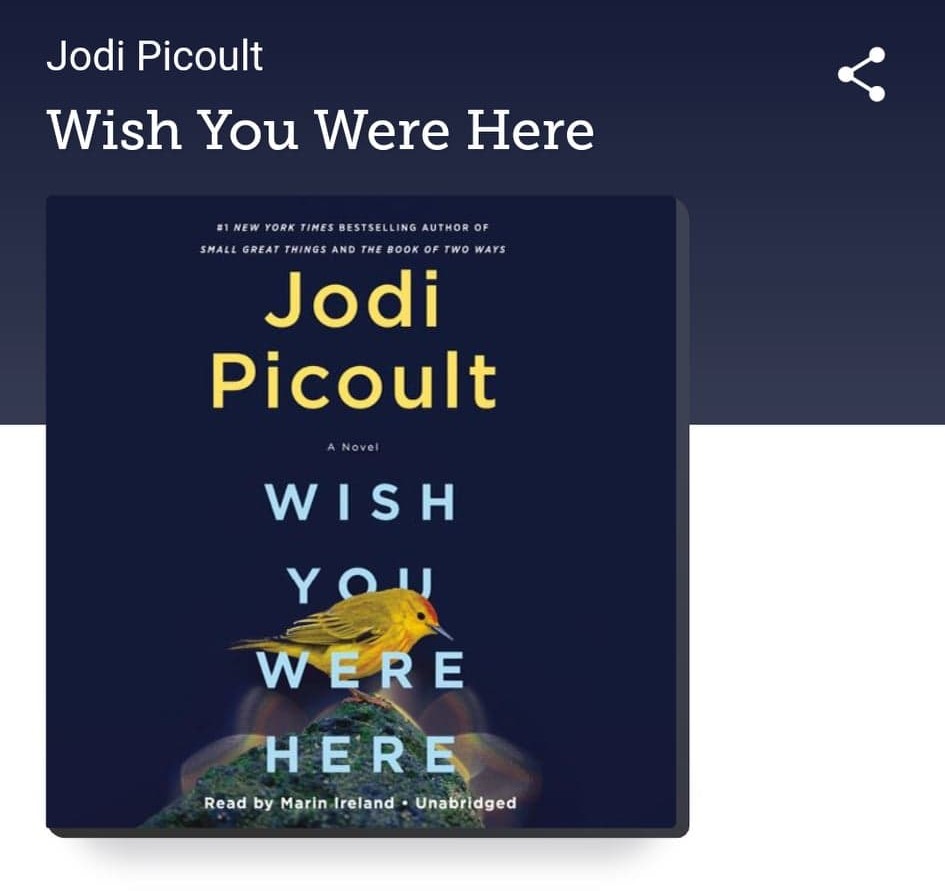
Book Review: Wish You Were Here

Title: Wish You Were Here

Author: Jodi Picoult

Genre: Contemporary, Romance

Pages: 310 pages; 12 hours (audiobook)

Level of difficulty: 3/5 Dictionaries

Rating: 5/5 Stars

Brief Introduction:

What has supposed to be a romantic getaway to the Galápagos for Diana and her boyfriend Finn – days before her 30th birthday does not go as planned. Finn, a surgical resident, must stay back in New York because it’s all hand on deck after the Covid-19 outbreak. However, he encourages and reassures Diana to go by herself since it would be a shame for all of their nonrefundable trip to go to waste. Unfortunately, Diana’s luggage is lost on her way to the Galápagos, the Wi-Fi is nearly nonexistent on the Island, and the hotel they’d booked is shut down due to the pandemic. In fact, the whole Island is now under quarantine, and she is stranded until the borders reopen.

Review:

In the book’s first part, I was a little disappointed by how the female lead ended up on the Island. I felt it was a little too convenient as a plot. However, by the book’s second part, that thought was knocked right out of me. Jodi Picoult is brilliant at engaging a reader and challenging all situations. At that point, I was reminded again why she is (one of my) favourite writer(s).

The themes in the novel about the pandemic were handled well and fully stretched despite being a relatively short book set in a complex time (and written at the earlier stages of the pandemic).

You may get the book here!

Black Venus

Black Venus as a Depiction of How Science, Academic Knowledge and Popular Entertainment Supported White Supremacy and Colonialism in the 19th Century

Black Venus is a French film based on the true life of Saartjie Baartman, a South African woman who moved to Britain with her employer Hendrick Caezar on the promise of a better life, sharing her musical talent. Baartman became a trope for popular entertainment in Britain and France. The movie portrays the traumatic experience she endures after being coerced into letting audience members touch her body, mistreated by French scientists and later forced into prostitution as a means of survival. Black Venus is an effective educational tool because it depicts how science, academic knowledge, and popular entertainment supported white supremacy and colonialism in the 19th century through the vivid portrayal of characters in the movie believing they had a right to Saartijie Baartman’s body. (Black Venus)

The film is an effective educational tool on how science supported white supremacy and colonialism because it revealed to the audience that the science practised in the 19th century was “race science”, focused on distinguishing the white race from all other races. In the movie, the French scientist George Cuvier announces to other scientists that the examination of Baartman’s skull proves that the “Negros didn’t give birth to Egyptians whom the world has learnt science and religion from”. He concluded that the discovery justified the “cruel laws” used to oppress non-whites because the white race’s skull and brain were as voluminous as the Egyptians. (Black Venus) Likewise, in Human Exhibitions: Race, Gender and Sexuality in Ethnic Displays, Rikke argues that the black female body “served to illustrate the underdevelopment of Africans” because it was “considered an incarnation of the past that could be examined to undercover information about the development of humankind” (118). This means that scientists had preconceived notions of black females as primal human beings and believed they could prove that claim by examining their bodies. In Black Venus, the notion is present in how George Cuvier approached Caezar thinking the South African man would allow Baartman to be examined in the name of science. In addition, it is evident how Cuvier pushes Baartman, despite her resistance, to show her vagina to all the scientists because her “guardian” gave permission. (Black Venus) Cuvier’s action is significant because Baartman as a black woman is reduced to a child who can’t give consent. The consequence of Baartman being infantilized is that after her death, she is reduced to just a body for Cuvier and his team to examine, even though it would have been against her wishes. Hence, depicting how the French scientist thought they had a right to Baartman’s body and how science supported white supremacy and colonialism. 

Black Venus is also an effective educational tool on how academic knowledge in the 19th century supported white supremacy and colonialism. It makes the audience question the ethics of museum acquisition methods and the ethics of using remains as commodities. In Making Representations: Museums in the Post-Colonial Era, Simpson argues that collecting activities in the 19th century “were undertaken without regard for the spiritual beliefs of relatives or descendants, and their permission was not deemed necessary”. This means that museums collected and kept human remains without considering how the individual or the community of that individual would feel about it. This is evident in Black Venus from how after Baartman died a painful death from illness, her body was sold to Cuvier by Reaux, who did not have any right over her body. Reaux’s successful action is significant because it highlights the French scientist’s lack of ethical consideration about how Baartman’s body was acquired. In addition, Baartman’s body, particularly her buttocks and genitalia, was cut up and displayed at the Paris National History Museum until 1974, after South Africa asked for them to be returned (Black Venus). The consequence of the display was the museum profiting from having Baartman’s body seen as “abnormal” and “explained as a physical reflection of the inferiority of her race” (Rikke 117). This message that the museum profited on is significant because it questions the ethics of using remains as commodities and highlights how academic knowledge in the 19th century supported white supremacy and colonialism. 

Finally, the film is an effective educational tool on how popular entertainment in the 19th century supported white supremacy and colonialism. It depicts a large part of the British public willing to pay money to be entertained by a racist trope. Rikke argues that “Africans were considered less intelligent and more primitive than Europeans…regarded as more explicitly sexual, with more direct and animalistic…sexuality” (115). This meant Europeans felt superior to Africans and thought they were justified too because of their perceived higher intelligence and reserved behaviour. This mindset is evident in the film from how Baartman is described as a savage who Caezar has captured from Cape Town. She is forced to put on a collar, make animal noises, and is fed treats when she listens to Caezar’s command. More so, Baartman is manipulated into allowing the audience members to touch her butt to prove it is real, while Caezar praises them for being brave. The consequence of Baartman being touched and poked at without her consent is emotional trauma and dependence on alcohol. (Black Venus) The fact that Caezar used a racist trope at the expense of Baartman, forced her to be touched by the audience and that the audience abided is significant because it depicts how Caezar and the audience believed that they had a right to her body. Hence, highlights how popular entertainment in the 19th century supported white supremacy and colonialism. 

Works Cited

Andreassen, Rikke. “Human Exhibitions: Race, Gender and Sexuality in Ethnic Displays.” Taylor & Francis, Taylor & Francis, 9 Mar. 2016, http://www.taylorfrancis.com/books/9781315587318.

Black Venus, 1 Jan. 2010, tubitv.com/movies/476646/black_venus.

Simpson, Moira G. Making Representations: Museums in the Post-Colonial Era. Routledge, Taylor & Francis Group, 2006. pp. 173-189. 

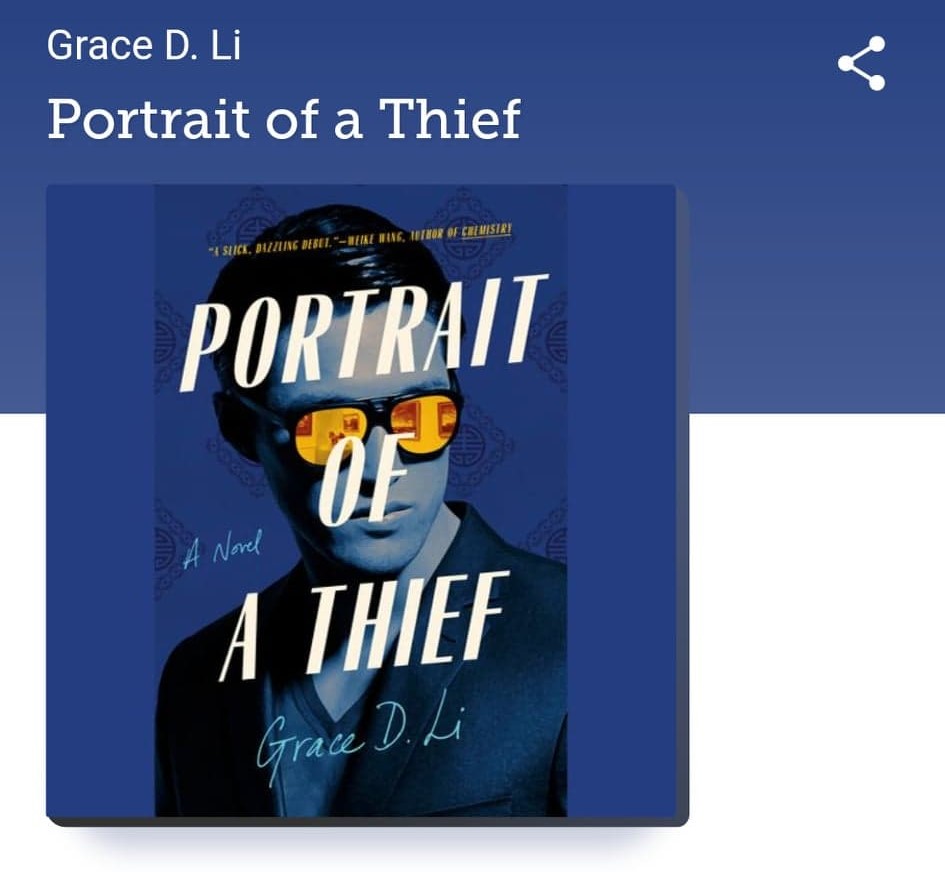
Book Review: Portrait of a Thief

Title: Portrait of a Thief

Author: Grace D. Li

Genre: Contemporary, Thriller, Mystery

Pages: 384 pages; 11 hours (audiobook)

Level of difficulty: 3/5 Dictionaries

Rating: 4/5 Stars

Brief Introduction:

A cultural heist, an examination of Chinese American identity, and a necessary cri­tique of the lingering effects of colonialism.

Review:

I’m giving this book a four-star for the literary, emotional and critical commentary rather than the actual heists. They were very faulty, quite convenient plans – definitely full of holes. Thus how they managed to execute them as novices was a suspension in disbelief.

The book is a feel-good about a possible situation where one can earn a tremendous amount of money to remove the burden of responsibilities and obligations while doing something meaningful and morally sound.

A running theme in the novel is the pressure of being an immigrant, more specifically, a second-generation Chinese in America trying to perform to the expectations of parents who believe in the American dream.

The critical commentary on imperialism (from both perspectives), colonialism, violence, and power were well woven into the story.

You may get the book here!

Academic Book Review – Feminism For The 99%: A Manifesto

Re-envisioning Feminism

In the book, Feminism For The 99%: A Manifesto, the authors Cinzia Arruzza, Tithi Bhattacharya, and Nancy Fraser discuss an intersectional, radical, anti-capitalist, decolonial, and anti-imperialist feminism that is inclusive of all, especially marginalised women called ‘Feminism for the 99%’. With organising principles and action strategies that ensure no group is sacrificed over another and that “anti-racists, environmentalists, and labour and migrant right activists” (Arruzza et al. 5) work together, ‘Feminism for the 99%’ protects the powerless and provides hope for effective change. Hence, re-envisioning feminism and the way it has been practised. This is further evident from the theses the authors discussed in the Manifesto, particularly theses 1, 3, 4, 6, and 8. 

Thesis 1 of the Manifesto states, “A new feminist wave is reinventing the strike” (Arruzza et al. 6). This refers to how ‘Feminism for the 99%’ reformed strikes, which were a form of protest only in the context of waged work, into a state of protest that withdraws labour along with housework, smiles, and sex (8). This form of protest is much more accessible to everyone from all sectors and regions. It allows for a global movement that requires little effort but has a significant impact primarily because we live in a capitalist world where labour is key to survival. By including actions related to unpaid emotional labour – housework, smiles, and sex, “the indispensable role played by gendered, unpaid work” (8) in a capitalist society, for which the system benefits but does not pay, is brought to light consequently. This deliberate attack against all types of exploitative labour is significant as it highlights that ‘Feminism for the 99%’ is radical and anti-capitalist. 

Thesis 3 of the Manifesto states, “We need an anti-capitalist feminism – a feminism for the 99%” (13). This statement is linked to how feminism today, rooted in capitalism, sacrifices the well-being of the many for the freedom of the few. For example, there has been an increased push for women to get into powerful positions, obtain a high income and establish wealth to be on the same playing fields as their male counterparts. However, this sort of feminism emphasises the individual. It assumes that a woman in power would be able to change the systemic problems that affect the lives of marginalised women worldwide. Unfortunately, that assumption is untrue as those systemic problems result from ill-capitalism. ‘Feminism for the 99%’ instead aims to work with “every movement that fights for the 99 per cent”, be it for environmental justice, “free high-quality education, generous public services, low-cost housing, labour rights, free universal health care”, anti-racism or world peace (15) to dismantle capitalism and thus tackle social justice issues from their root. Hence, once against presenting how ‘Feminism for the 99%’ is anti-capitalist. 

Thesis 4 of the Manifesto states, “What we are living through is a crisis of society as a whole – and its root cause is capitalism” (16). This means capitalism destroys anything it uses, such as nature, public goods, and human beings. As such, the political, economic, ecological, and social justice issues the world is facing are caused by capitalism. One example is the refugee crisis – marginalised folks are displaced daily due to war, violent conflicts, and environmental disasters. These circumstances that result in the displacement of marginalised folks are rooted in ill-capitalism, such as how companies pollute the air and water sources at the expense of people for profit, and similarly, how countries export arms to volatile regions for the sack of profit. Canada is one country that profits from the violent conflicts that cause displacement. Yet, Canada believes itself to be a country that practices “humanitarian exceptionalism” because it presents itself as a haven for displaced people and is more benevolent than the United States regarding accepting refugees. However, Canada predominately takes exceptional refugees, such as community organisers and activists. Furthermore, it employs immigration laws that discriminate against refugees based on race, sexuality, and ability (Phu et al. 29). Unfortunately, Canada’s performative action is also rooted in ill-capitalism, as the nation is driven by its desire to push an international and local political narrative of an “international leader in human rights and democratic freedom” (29) at the expense of vulnerable human beings. Hence, ‘Feminism for the 99%’ argues that by eliminating capitalism based on exploiting others, we can efficiently work on putting an end to the problems facing our Earth.

Thesis 6 of the manifesto states, “Gender violence takes many forms, all of them entangle with capitalist social relations. We vow to fight them all.” (Arruzza et al. 25). Capitalist social relations refer to the social links that occur under capitalism, between an employee and an employer or between intimate partners. In addition, due to the different aspects of private and work life, women are subjected to violations both at the hands of family and personal intimates and at the hands of “capital’s enforcers and enablers” (28). One example of a capitalist social relationship where gender violence is present and common is between women migrant workers and their employers. Although borders are not fixed and thoroughly ideological, they produce “hard workers” (Anderson et al. 7). This is because immigrants must work hard to keep their status in the country, which their employers have over them as citizens. The power that citizens have over migrants puts these female migrant workers in vulnerable and dangerous situations, such as when their bosses or managers in factories, for example, “use serial rape, verbal abuse, and humiliating body searches to increase productively and discourage labour organising” (Arruzza et al. 32) because they endure the mistreatment for fear of being deported. Borders, and consequentially, nationalised identities, which are colonial as most settlers do not have rights to the land they claim, are “a key strategy in dividing and subordinating labour” (Anderson et al. 13). Thus, ‘Feminism for the 99%’ which aims to fight all forms of gender violence, such as those that occur due to the construction of borders, is anti-colonial. 

Thesis 8 of the manifesto states, “Capitalism was born from racist and colonial violence. Feminism for the 99 per cent is anti-racist and anti-imperialist” (Arruzza et al. 40). This means that the foundation of capitalism is racism and colonialism. Thus any feminism that does not actively dismantles capitalism would be enabling racism and colonialism. Unfortunately, this failure was present in the first, second, and third wave feminisms. First-wave feminism was liberal feminism and focused on getting women the vote. However, Black women and their needs were excluded in the process. White chosen stead choose to dissociate themselves from white men and argued that racism was “endemic to white male patriarchy” and that they could not be “held responsible for racist oppression” (“Chapter 4: Racism and Feminism: The Issue of Accountability”). Consequentially, this ignorance from white women during the first wave of feminism birthed Black Feminism, a philosophy that “motivated black feminists to work against their multilayered oppression” and to challenge “white feminists to acknowledge their exclusion of women of colour and working-class women in the feminist movement” (“The Combahee River Collective Statement (1977)”). This effort to include racialised and working-class women is also present in ‘Feminism for the 99%’. On the other hand, second-wave feminism, which was radical and concerned about racism, failed to include transgender and non-binary people in the conversation. Lastly, third-wave feminism, which is post-modern feminism, was focused on social media, digital space, and the representation of women. Although it began being more inclusive, it supported ill-capitalism by encouraging women to obtain high positions,

Overall, ‘Feminism for the 99%’ attempts to re-envision feminism. It is intersectional, radical, anti-capitalist, decolonial, anti-imperialist, and inclusive, especially for marginalised women. It challenges all that we have been accustomed to when we discuss and engage with feminism by enforcing organising principles and action strategies that emphasise no group is sacrificed over another, that all activist and community organisers need to work together, and that capitalism has to be dismantled for long-standing effective change to happen. While this is one way to re-envision feminism and its movements, as a manifesto, it oversimplifies the severe hostility against feminists and feminism, especially today.

You may get the book here!

Work Cited

Arruzza, Cinzia, et al. Feminism for The 99%: A Manifesto. Verso, 2019. 

Anderson, Bridget, et al. “Editorial: Why No Borders?” Refuge, vol. 26, no. 2, 1 Jan. 2009, pp. 5–18., doi: https://doi.org/10.25071/1920-7336.32074. 

“Chapter 4: Racism and Feminism: The Issue of Accountability.” Ain’t I a Woman: Black Women and Feminism, by Bell Hooks, Routledge, 2015, pp. 119–158. 

Phu, Thy, Vinh Nguyen, et al. “STATES OF REFUGE: KEYWORDS FOR CRITICAL REFUGEE STUDIES.” Sept. 2019. “The Combahee River Collective Statement (1977).” Available Means: An Anthology of Women’s Rhetoric(s), by Joy S. Ritchie and Kate Ronald, University of Pittsburgh Press, 2001, pp. 291–300.

Book Review: Wicked Fox (Gumiho #1)

Title: Wicked Fox

Author: Kat Cho

Genre: (Korean) Mythology, Low Fantasy, Romance

Pages: 429 pages; 12 hours (audiobook)

Level of difficulty: 3/5 Dictionaries

Rating: 3/5 Stars

Brief Introduction:

Gu Miyoung is an 18-year-old gumiho, a nine-tailed fox who must devour the energy of men to survive. One night, she stumbles upon and saves Jihoon from being attacked by a globin deep in the forest. However, this action violates the rules of survival and puts her at risk.

Review:

I think this book would have been better read than listened to. In addition, the narrator spoke in a sad, gloomy manner, which I don’t think was a good fit for the novel.

The plot was engaging and there were quite a few surprise twists. However, I felt like it was missing something. Maybe there was not enough time spent between the main characters for there to be as deep of a love to be formed and depicted – they were willing to die for each other. In addition, there is a lot of trauma between the two characters, and I am usually not a fan when characters bond because of the trauma they face.

Unfortunately, I will not be continuing with the series. The bridge to the next book did not make me excited. Instead, it made me sad for the female main character and thus unwilling to see her endure even more pain.

TW: Death, Murder

You may get the book here!

Book Review: Ugly Love

Title: Ugly Love

Author: Colleen Hoover

Genre: Romance, Contemporary

Pages: 324 pages; 9 hours (audiobook)

Level of difficulty: 3/5 Dictionaries

Rating: 2/5 Stars

Brief Introduction:

Tate and Miles agree to a low-stakes relationship because of their personal circumstance. However, things take a turn for the unexpected…or did it?

Review:

This book should come with the warning “when someone tells who they are, you better believe them”. I know it’s fiction, but it paints the picture that one can get into a relationship by disregarding boundaries…and believing the idea that one can “change” a man…

The trauma that the male lead went through, while very saddening, felt artificial. It was like the incident was put there for the shock factor…to explain his aloofness yet excuse his behaviour towards the female lead. This was the case because there was little to no elaboration of why the incident had happened and the immediate effects of that incident (I’m being general here to prevent spoilers).

I did enjoy the shifting point of view, especially how Tate’s pov was in the present and Miles’ was always in the past. It emphasised that he was stuck in the past. Furthermore, Miles’ pov is read in the present only after the resolution between the lead characters. This was a nice touch in the book.

You may get the book here!