Book Review: Pachinko

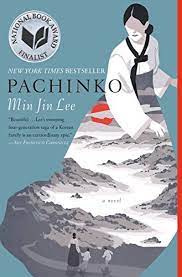
Title: Pachinko

Author: Min Jin Lee

Genre: Historical Fiction, Literature

Pages: 453

Level of difficulty: 4/5 Dictionaries

My Rating: 4/5 Stars

Brief Introduction:

Sunja, the daughter of a loving family, falls for a stranger often seen near the market in her hometown in Korea as a teenager. Their interaction leads to her pregnancy, but unfortunately, she soon realises that she cannot marry him. She instead accepts a marriage proposal from a gentle, sickly minister and moves with him to Japan. This decision further unfolds breathtakingly through the generations.

Trigger warnings: Assault, Addiction and Suicide

Favourite Quote:

“Sunja had heard this sentiment from other women, that they must suffer—suffer as a girl, suffer as a wife, suffer as a mother—die suffering. Gosaeng—the word made her sick.”

Pg. 373

Review:

Pachinko follows the lives of several individuals in a family tree from before the Japanese occupation of Korea to way after the atomic bombings in Hiroshima and Nagasaki. We are told the story from a bird’s eye view, where we see each character and learn about them from a third person’s perspective. However, the story was not difficult to follow at all. It was not only well written but highly moving too. I actually cried less than 50 pages into the novel.

Overall, the story is about life, more specifically the lives of Korean immigrants in Japan during the Japanese occupation of Korea and long after the Cold War, and thus encompasses many themes. The author did an excellent job of highlighting how racism and discrimination limit people’s options and drastically change their lives. Something that is sadly still prominent in today’s time. She was also brutally honest yet compassionate while portraying women’s lives throughout the history in which the story plays out.

However, something I was disappointed about was the lack of explanation for certain characters’ death. Then again, it might have been intentional to represent life and how we rarely get answers to many painful experiences.

Despite the story’s slow pace, it was a page-turner!

You may get the book here!

The Effect of Rhetoric on Representation as Argued in Signifying Bodies and Showcased in Cockeyed

Summary; 2018

In G. Thomas Couser’s chapter, “Rhetoric and Self-Representation in Disability Memoir” in Signifying Bodies, he argues that autobiographies from marginalised groups such as disabled people have the power to remove the social, economic and political domination in their lives. This is because they are given the power to represent themselves. In the chapter, Couser focuses on “rhetoric” (i.e. the way the narrator tells their story), illustrating with real disability memoirs how the various types of rhetoric – “triumph, horror, spiritual compensation, and nostalgia”, enforce the stigma and marginalisation of disabled people (33). In the end, Couser introduces the rhetoric of emancipation in the memoir I Raise My Eyes to Say Yes by Ruth Sienkiewicz-Mercer and Steven B. Kaplan. Couser explains that Sienkiewicz-Mercer illustrates disability as something that can be accommodated if society removes the ‘physical, social and cultural obstacles’ (44) that it has created, as opposed to something that requires fixing. These types of social accommodations contribute to the positive representation of disabled people.

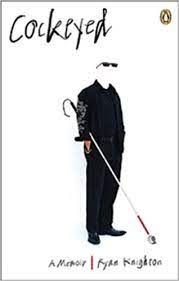
One rhetoric that was present in the disability memoir Cockeyed by Ryan Knighton was “rhetoric of nostalgia” (Couser 38). Couser exemplifies with the memoir The Driving Bell and the Butterfly by Dominque Bauby that this rhetoric is when the narrator tells his story reminiscing when they were not disabled. The consequence of the rhetoric is it enforces the perception that disability makes someone less of a person. In Cockeyed, this rhetoric was present in Ryan denying his blindness by refusing to get a cane and enduring relentless injuries from bumping into things. This created great sympathy for Ryan, especially when he fell into “oncoming traffic” (Knighton 60) because it emphasised that his deteriorating vision puts him in constant danger. This subconsciously created the impression that he was less of a person than before losing his sight, which is in line with the consequence of “rhetoric of nostalgia” (Couser 38).

However, in Cockeyed, “rhetoric of nostalgia” (38) was then replaced with “rhetoric of emancipation” (44), as Ryan learned to accept his disability and that it does not define him. Couser illustrates with the memoir I Raise My Eyes to Say Yes that this rhetoric is when the narrator reveals that what causes the discrimination of disabled people in society’s perception of disability and not the actual physical or mental disability. This was present in Knighton’s memoir when he had a “shift in perspective” (71). Ryan realised that people have multiple reactions to him using a cane because of their perception of disability and feelings towards those with disabilities (72).

In conclusion, Couser’s chapter has highlighted the lost potential of some disability memoirs for challenging stigmas because of their rhetoric. In addition, Cockeyed has illustrated that different types of rhetoric can be present in a single disability memoir. This could have been because, like understanding disability, for those who are disabled, accepting it can also be a process. Hence, it is crucial that when people read memoirs from marginalised groups, they understand that it represents the individual first and foremost but are critical about how those personal narratives represent the collective.

Work Cited

Couser, G. T. Signifying Bodies: Disability in Contemporary Life Writing. University of Michigan Press, 2009.

Knighton, Ryan. Cockeyed: a Memoir. PublicAffairs, 2006.

Book Review: The Seven Husbands of Evelyn Hugo

Title: The Seven Husbands of Evelyn Hugo

Author: Taylor Jenkins Reid

Genre: Historical Fiction, Contemporary, Romance

Pages: 389

Level of difficulty: 3/5 Dictionaries

Rating: 4/5 Stars

Brief Introduction:

Evelyn Hugo is a big-time Hollywood actress who has not been in the spotlight for a long time. However, now that she is older, she is about to do a tell-all (especially about her 7 marriages) alongside an auction of 7 of her most famous gowns for charity. However, she has chosen an unknown journalist Monique Grant to do the interview.

Favourite Quote:

“When you’re given an opportunity to change your life, be ready to do whatever it takes to make it happen. The world doesn’t give things, you take things.”

Pg. 41

Review:

Why this journalist? Why did she get married 7 times? Did she love all her husbands? These are all the burning questions that push readers to pick up the book. The author explains the dynamics between Hugo and her husband: why she felt compelled to get married and how the marriages came to their end. Yet, at the same time, while we are learning all of these and trying to understand the complex individual that Hugo is, the author ignites our curiosity about why Monique Grant is the reporter for the interview. Furthermore, there were many exciting twists and turns in the book (even though I guessed most of them).

You may get the book here!

Media Representation of Drug Addiction and How it Perpetuates Stereotypes

Amy Winehouse. Cory Monteith. Prince. Mac Miller. Philip Seymour Hoffman. One commonality these individuals have is that they were all celebrities who passed away from an overdose. In general, the media talked about their great work, the work they would be leaving behind, and how their significant others would miss them. Overall, celebrities with drug addiction are depicted as worthy victims [1] (Herman and Chomsky, 2002). The way the media represents celebrity addicts usually gives them justification for their drug addiction because of the high stress they experience from their lives being constantly in public. In addition, the media never portrays being a drug user as their primary identity.

Unfortunately, everyday individuals who suffer from drug addiction don’t have such a privilege. They are deemed unworthy victims [2] (Herman and Chomsky, 2002) of society if they suffer from addiction, which is a disease. This means that society takes little concern that these individuals need reformed government policies and a changed societal perception to help them battle their disease. This is evident, for example, from the increased number of raw, uncensored videos of people “passed out with needles in their arms” [3] (Seelye et al., 2018) posted on YouTube. One such video was an instance when Mandy McGowan collapsed from a fentanyl overdose in a Dollar Store she had visited with her 2-year-old daughter. The fact that when the situation occurred, people began taking a video of her unconscious instead of attending to her sobbing daughter highlights the lack of disregard for drug addicts. The consequences of the lack of disregard are severe too. McGowan is known as a “Dollar Store Junkie” and now struggles with addiction and the negative image of herself from a video of one of the most challenging moments of her life that shall live on the internet forever. [4](Seelye et al., 2018)

This treatment of people suffering from addiction, how society views addicts as unworthy victims and how they have been represented in the media is significant because it creates a massive stigma of addiction. This makes it harder for addicts to seek the help they need to battle the addiction, thus contributing to a cycle.

However, there is hope. Apart from the Canadian Harm Reduction Network, which promotes harm reduction as a means of focusing on “the harm caused by problematic substance use, rather than substance use per se” [5](City of Vancouver, 2017), other organisations are fighting to remove the stigma of addiction in society as one of the ways to help people battling addiction. One such example is the provincewide campaign by the British Columbia Ministry of Mental Health and Addictions in association with the Vancouver Canucks hockey team [6] (Ghoussoub, 2018) to show that an individual with an addiction identity as a drug user is just one among the many identities that link them to a community such as “daughter”, “co-worker” and “student”. In addition, health authorities such as Northern Health, Fraser Health, and First Nations Health Authority are working to reduce the stigma of addiction and prevent overdose by highlighting narratives about the impact of negative stereotypes around the disease [7] (Government Communications, 2017).

(First year, 2018)

References

Ghoussoub, M. (2018, January 29). Vancouver Canucks launch campaign to fight stigma surrounding addiction | CBC News. Retrieved from https://www.cbc.ca/news/canada/british-columbia/vancouver-canucks-launch-campaign-to-fight-stigma-surrounding-addiction-1.4509402

Government Communications. (2017, September 07). Reducing Stigma. Retrieved from https://www2.gov.bc.ca/gov/content/overdose/reducing-stigma

Herman, E. S., & Chomsky, N. (2002). Manufacturing consent: The political economy of the mass media. New York: Pantheon Books.

Seelye, K. Q., et al. (2018, December 11). How Do You Recover After Millions Have Watched You Overdose? Retrieved from https://www.nytimes.com/2018/12/11/us/overdoses-youtube-opioids-drugs.html

City of Vancouver. (2017, January 20). Four Pillars drug strategy. Retrieved from https://vancouver.ca/people-programs/four-pillars-drug-strategy.aspx


[1]Herman, E. S., & Chomsky, N. (2002). Manufacturing consent: The political economy of the mass media. New York: Pantheon Books.

[2] Herman, E. S., & Chomsky, N. (2002). Manufacturing consent: The political economy of the mass media. New York: Pantheon Books.

[3] Seelye, K. Q., et al. (2018, December 11). How Do You Recover After Millions Have Watched You Overdose? Retrieved from https://www.nytimes.com/2018/12/11/us/overdoses-youtube-opioids-drugs.html

[4] Seelye, K. Q., et al. (2018, December 11). How Do You Recover After Millions Have Watched You Overdose? Retrieved from https://www.nytimes.com/2018/12/11/us/overdoses-youtube-opioids-drugs.html

[5] City of Vancouver. (2017, January 20). Four Pillars drug strategy. Retrieved from https://vancouver.ca/people-programs/four-pillars-drug-strategy.aspx

[6] Ghoussoub, M. (2018, January 29). Vancouver Canucks launch campaign to fight stigma surrounding addiction | CBC News. Retrieved from https://www.cbc.ca/news/canada/british-columbia/vancouver-canucks-launch-campaign-to-fight-stigma-surrounding-addiction-1.4509402

[7] Government Communications. (2017, September 07). Reducing Stigma. Retrieved from https://www2.gov.bc.ca/gov/content/overdose/reducing-stigma

Book Review: All About Love

undefined

Title: All About Love

Author: bell hooks

Genre: Non-Fiction (Love, Modern Society, Psychology & Philosophy)

Pages: 237

Level of difficulty: 3/5 Dictionaries

Rating: 4/5 Stars

Brief Introduction:

In today’s age, love is portrayed as this fluffy feminine thing that is unproductive and that we could do without. bell hooks challenges that narrative going as far as to argue that love is irreplaceable (something we inherently crave for and need, especially to create a more inclusive world), a skill to be learned, and a value to be defined. The author proves so by using personal experience and psychological and philosophical work by others on similar topics.

Favourite Quote:

“The wounded heart learns self-love by first overcoming low self-esteem.”

Pg. 55

Reasons To Read It:

1. It’s packed with moral lessons.

The novel is only 237 pages. However, in each chapter, there is a lesson, if not lessons. There were many times I had to put the book down after reading a chapter to process and ponder on what I had just read. To think critically about what was read and ask questions. Nevertheless, the book was not placed down for too long as its beautiful writing and full-packed insights were enchanting.

2. It is a timeless novel.

Despite the book’s publication being in 2001, it is still relevant 20 years later. This book needs to be read at different stages of one’s life and at different ages, too, not only because of its prominent reminder of the power of love but also because there shall be a takeaway each time it is read.

You may get the book here!

Intersectionality

According to Billboard, the number one streaming song of the week, January 12, 2019, was the hip hop/rap song Sicko Mode by Travis Scott ft. Drake. Like most, if not all, rap songs, the persona Travis sings about all the women he has ‘gained’ because of his music career and sex. This was evident from the lines: “All of these hoes I made off records I produced/(Don’t stop, pop that pussy!)” ( Lenniger) Likewise, one minute and forty-two seconds into the music video, Travis is seen with numerous women of African descent lying with their butts facing the camera on the floor of what looks like an abandoned car park in nothing but a bra and a G-string. On the other hand, he sits half-naked on a sofa in front of them. The display of women of African descent in provocative clothes or bikinis dancing or interacting with the two rappers continues throughout the video.

The image created is that the worth of women of African descent is based on their sexual appeal (Gordon 246), and they exist only to serve men. This is because only women of African descent are being hyper-sexualized and sexually objectified in the music video. The image denies these women the power to be equal to men as they are “reduced to body parts rather than whole persons with thoughts, feelings, and desires” (Gordon 246). In addition, they are denied the power to create their own narratives because the image normalizes the stereotype of women of African descent as naturally sexual, fertile, and submissive to men. Hence, the image is controlling, and the dominant group of men create the identity of women of African descent as “the other”. (Collins 68)

Malcolm X once said that “The most disrespected person in America is the Black woman.” (Common) One area where this is very evident in hip-hop, which was birthed in America, because of “the proliferation of highly sexualized and exoticized images of women…in numerous hip hop music videos…for the most part, [are] of African descent” (Maultsby and Burnim 306-307). Hence, these women are not only perceived as inferior to men but they are also perceived as inferior to women of other races too. This sexual objectification in the hip-hop culture reflects different forms of oppression for women of African descent – their race, their gender, and their sexuality.

The group that benefits from the image discussed, apart from the music industry, which receives lots of money from the popularity of hip-hop music, is men. They get away with objectifying women of African descent and sexually taking advantage of their insecurity. When a negative image, such as the devaluing of self-worth, is constantly repeated, it is “embedded in psyche” and eventually becomes the nature of the individual (Gammage 51). In addition, due to cultivation theory (Gordon 246), young girls and women of African descent grow up believing they must be sexually appealing to get and keep a significant other. However, young boys and men are victims of the image too. They grow up thinking that having sex is equivalent to power and incorporate that into their lives and music, even if they enter the industry because the art form demands they speak of their reality. This creates not only a cycle of the image but of abusive relationships in the culture too.

The consequences of this cycle and this image are numerous. For example, girls of African descent are sent home from school because of violating dress codes when in fact, it is because the institution “deems their bodies too provocative” (NowThisNews).

Since the image of women of African descent intersects multiple areas, its solution needs to be intersectional. Liberal Feminist tools are required to tackle gender inequality because ‘female rappers’ don’t have the same opportunities or popularity in the music industry. Poststructuralist Feminist tools are necessary to educate rappers on the impact of what they say, how they talk about and depict these women. Marxist Feminist tools are required to stop the music industry from exploiting these women’s sexuality. Finally, post-colonial Feminist tools are needed to reverse the European enslavement of Africans and colonial enhancement of the hyper-sexualized treatment of these women’s femininity (Gammage 34). Action needs to be taken now!

Works Cited

Common. “Malcolm X.” Twitter, Twitter, December 24 2017, twitter.com/common/status/944995848886218752?lang=en.

Collins, Patricia Hill. Black Feminist Thought. Routledge, 2000.

Gammage, Marquita Marie. REPRESENTATIONS OF BLACK WOMEN IN THE MEDIA: The Damnation of Black Womanhood. TAYLOR & FRANCIS, 2017, http://www.taylorfrancis.com/books/9781315671550.

Gordon, Maya K. “Media Contributions to African American Girls Focus on Beauty and Appearance: Exploring the Consequences of Sexual Objectification.” Psychology of Women Quarterly, vol. 32, no. 3, 2008, pp. 245–256., doi:10.1111/j.1471-6402.2008.00433.x

Lenniger, Shea. “Here Are the Lyrics to Travis Scott’s ‘Sicko Mode’.” Billboard, Billboard, September 26 2018, http://www.billboard.com/articles/news/lyrics/8477102/travis-scott-sicko-mode-lyrics.

Maultsby, Portia K, and Mellonee V. BurnimIssues in African American Music: Power, Gender, Race, Representation. Routledge, 2017, http://www.taylorfrancis.com/books/9781315472089.

NowThis News. “Author Monique Morris Shines A Light On The Black Girl’s Unique Experience In America.” NowThis, NowThis News, August 29 2018, http://www.nowthisnews.com/videos/her/author-monique-morris-on-black-girls-unique-experience-in-america.

“R&B/Hip-Hop Streaming Songs.” Billboard, Billboard, http://www.billboard.com/charts/r-and-b-hip-hop-streaming-songs.

2707

Today I undeniably felt loved
and it was great
despite me feeling like shying away from the emotions I was showered with

Today I learned once again that love isn’t about whether you make mistakes, or have arguments,
it is about how you resolve them
and ensure that they aren’t repeated

Today I learned that I am not entitled to anything,
not to anybody’s kindness or commitment;
it’s a gift
just the same way my consistency is

Today I have decided to be vulnerable,
to ensure for myself that my actions are deserving of kindness, and surround myself with people who challenge me to be loving; to be humble

child

it’s saddening to see that
time and time again
females fall victim to modelling the standards
and behaviours that society has foolishly inked
as necessary to find a male partner
of which
does nothing but slowly burn a hole in their souls
and feed toxic masculinity

Fair

It’s never fair.
The girl playing
tag across the street.
The boy trying
to save his
friend from trouble.

The unfinished letters.
The unspoken promises:
broken, shattered, destroyed.

It’s just never
fair.

Waterfront Station

The fact that you were late
and the way you dressed were a disappointment

I didn’t want you to hold my hand at all
The idea made me feel an uneasiness like never before
Your hands brushing against mine
Caused me to put my hand in my pocket the whole time

My innocent demeanour made you call yourself a ‘rebel’ but your attempt to impress cracked your act
Your insecurity was like a giant shadow that towered you
Your inability to talk about yourself removed the maturity from your years
Your questions were bullets I used my laughter to dodge

The fact that you had no plan made me want to cry
The accent you tried to pull off made me want to turn back around
The constant attack at yourself and your values made me feel sorry for you
The mere thought back to the moment makes me sick in the stomach and I wonder if I shall ever laugh at the experience

However, this was a two player game
I wonder if you saw a reflection of yourself in me
I wonder if your awkward attempt at saying hi when our eyes locked was a reflection of your disappointment
I wonder if you heard the frustration in my voice and shot questions as a shield
I wonder if you mistook my laughter as encouragement

I can’t lie and say I don’t feel guilty
There is a little part of me that feels bad for giving you hope, but
There is a bigger part of me that knows you can’t see the full picture of a jigsaw puzzle by just picking up two of its pieces